Whale Watching Long Beach Visitors


CLICK HERE TO CLAIM OFFER
Buy tickets online
Newport Landing at Newport Beach has long been a favorite of Whale Watching Long Beach area visitors. Newport Landing has been in business for almost three decades and continues to serve as the destination for those seeking whale watching cruises from the Long Beach area. We are a located a mere 20 minutes south of Long beach, and offer several cruises each day all year round, giving our customers numerous chances to view whales and dolphins in their natural habitats.
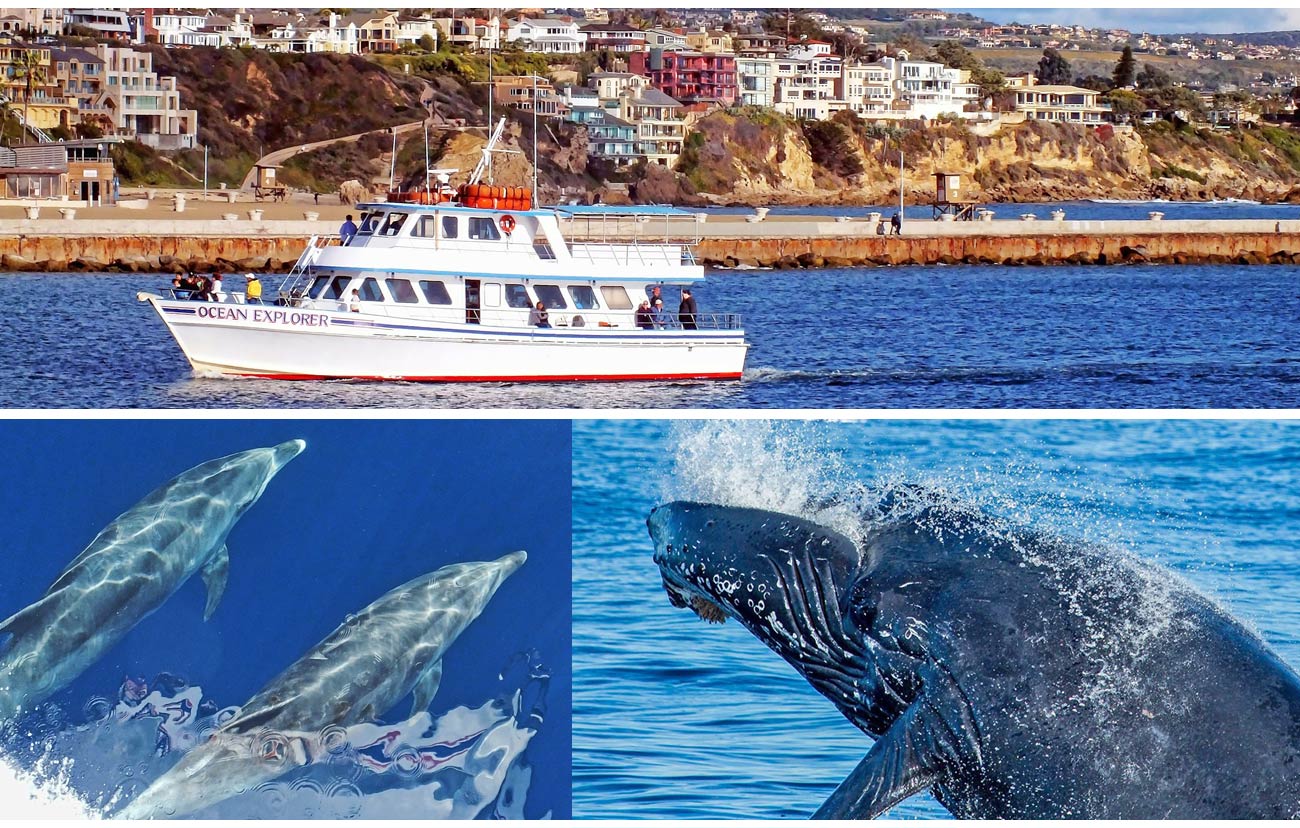

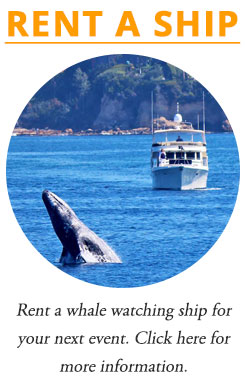
During the Winter and Spring, Whale Watching Long Beach visitors will have the opportunity to witness the annual Grey Whale migration, during which thousands of Grey Whales travel back and forth along the coastline to their breeding area in Mexico and back to the Pacific Northwest from whence they came.
In the Summer and Fall, Whale Watching Long Beach visitors will be able to view the magnificent Blue Whale along the coast. The Blue Whale is the largest mammal in the world with an average length of over 80 feet. Each Blue Whale can consume 4 to 6 tons of krill each day and this is sure to be an amazing sight for all our Whale Watching Long Beach visitors.
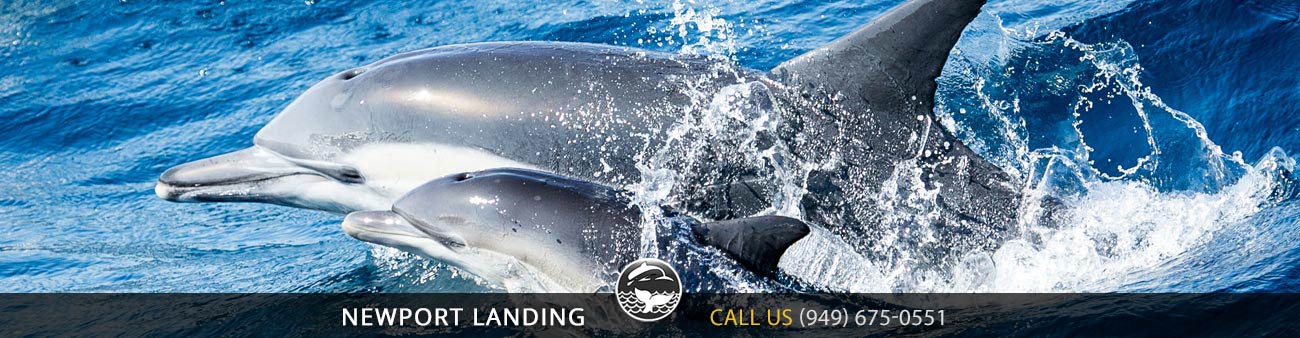
Whale Watching Long Beach visitors will also be able to see several other species of whales as well as large pods of Bottlenose Dolphins and Common dolphins. Sea Lions and Sea Lion pups are a common sight, having colonies along the Whale Watching cruise route. Newport Landing offers Whale Watching Long Beach visitors a beautiful and convenient harbor located just minutes away with numerous opportunities to view whales and dolphins. Catalina Island also serves as a natural barrier for these waters, allowing for our tour area to have some of the calmest waters in all of the US West Coast.
Recommended Things to Bring When Whale Watching
- Binoculars - Are highly recommended. You may bring your own pair or rent one, but they are indispensable in providing the full experience of Whale Watching. There are many things you would miss with the naked eye - like the barnacles on a Grey Whale or the markings of a Risso's Dolphin.
- Camera - A camera is essential for those who love to take photographs, and even for the non-enthusiast bringing a camera along still represents a chance to capture memories that will last a lifetime.
- Jacket - Are highly recommended as it can be a little chilly when on the water no matter what season it is. Layering is the way to go as the temperature will vary throughout the day.
- Sunscreen & Chapstick- Sunscreen & Chapstick are always recommended as the sun does get quite intense, even during the peak of winter. Be sure to apply ample amounts to avoid getting any burns.
- Cash - You will need cash for snacks and beverages. Unfortunately, we are only able to accept cash at our refreshments center on the boat.
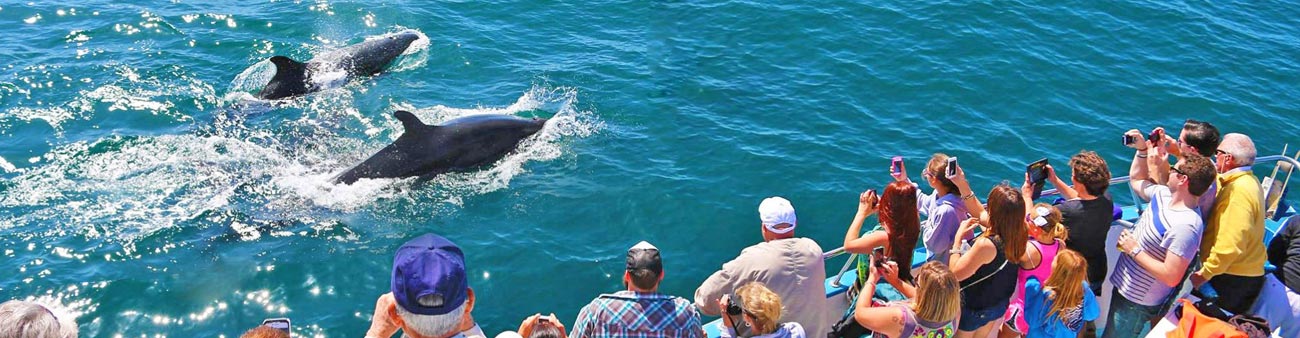
Whale Species in Long Beach and surrounding waters
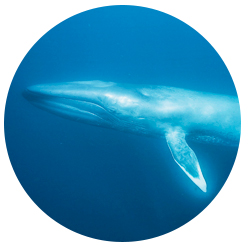 Blue Whale - The blue whale is truly an incredible sight. Whale Watching Long Beach visitors will have the opportunity to witness the largest animal that has ever existed on Earth. Large Blue Whales are the size of a Boeing Jet, weighing up to 150 tons. Larger whales can go up to 100 feet long. Fifty humans can stand on a Blue Whale's tongue and its heart is the size of a car. It's throat can take in up to 50 tons of water in one gulp and it's spout shoots water up over 30 feet when surfacing for air. Blue Whales can consume up to six tons of krill in a single day using their large throats to take in water and use a huge, comb-like plate system called baleen within their bodies to parse through water for the krill. These plates in the baleen system are made from the same material as human fingernails.
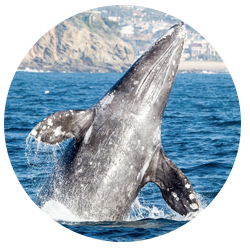 Grey Whale - Whale Watching Long Beach visitors will have a chance to bear witness to the California Grey Whale, also a type of baleen whale that uses the baleen system within their bodies to strain through krill. The California Grey Whale stands among the largest species of whales, but are still roughly half the size of their Blue Whale cousins. They generally weigh somewhere between 22 to 35 tons, and are 35 to 45 feet in length, with the females being larger than the males. These California Grey Whales travel over 8,000 miles a year from their feeding grounds in the North, where they feed on amphipods in cold arctic waters. During the fall and winter they travel all the way south to the Baja California to breed.
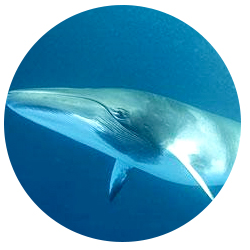 Finback Whale - Another amazing spectacle for Whale Watching Long Beach visitors is the Finback Whale. They are the second largest animal in the world after the Blue Whale. Growing up to nearly 90 feet long, Finback Whales are also the fastest type of whale, able to hit top speeds of 35 mph. Also a type of baleen whale, their bodies contain 800-900 plates to feed on fish and krill, eating up to 2-3 tons a day. Their spouts stand prominent, capable of rising over 20 feet in the air when surfacing. When these graceful Finback Whales surface, you'll be able to spot their heads, their dark features and also their long dorsal fin. Their tails are rarely seen as they surface horizontally and need only arch their backs to dive back into the sea.
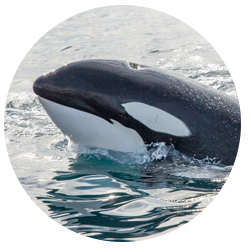 Killer Whale (Orca) - Whale Watching Long Beach visitors may spot the Orca Whale, commonly known as the Killer Whale because of their reputation as top notch predators of the sea. Often called wolves of the sea, Orca Whales hunt in packs and have tremendous size and strength. They are also one of the fastest types of whales, capable of traveling at over 35 mph. Each Killer Whale eats over 500 pounds of food a day and have been known to even swim into freshwaters. However, their migration patterns are not yet fully understood by scientists. Their pods have been sighted from Alaska all the way down to California.
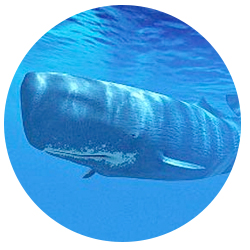 Sperm Whale - Whale Watching Long Beach visitors may also spot the Sperm Whale. The Sperm Whale has the largest brain of any animal in existence, with their brains weighing up to twenty pounds! Sperm Whales are toothed whales and live together in pods. Sperm Whales have unique S-shaped blowholes on the front left side of their large heads. Adult can weigh up to 50 tons and grow to be 50-60 feet in length. Naturally, with their large brains, Sperm Whales also have the largest heads of any animal, comprising a third of the Sperm Whale's body mass and featuring a distinct, boxy shape. Their heads often feature prominent scars from the giant squids that they call prey.
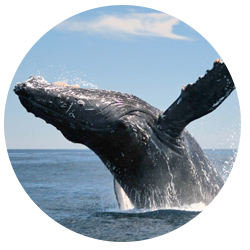 Humpback Whale - Whale Watching Long Beach visitors may also see the Humpback Whale, one of the larger species of Whales in existence. The Humpback Whale weighs on average about 79,000 pounds and vary in length from 40 to 50 feet. Humpback Whales feed in polar waters during the summertime and migrate to subtropical and tropical waters during winter to breed. Humpbacks whales do not eat in the winter, and rely upon the fat reserves that they've built up during the summer feeding months. Humpback Whales also hunt in groups of up to twelve, using unique methods to ensnare their prey. The group of Humpback Whales will blow bubbles while swimming in circles around a school of fish, creating a ring around the fish. The fish are confined to a smaller and smaller area as the whales continue the process, until the whales swim through the bubbles and swallow thousands of fish in a single gulp. It is truly a group effort as some whales are tasked with blowing bubbles, others herd fish with noises, others, dive deep to drive fish to the surface. zen Humpbacks.
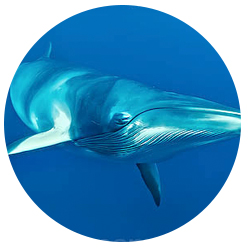 Minke Whale - Whale Watching Long Beach visitors will likely encounter Minke whales, the most common baleen whale in existence, numbering nearly 800,000 across the globe. As with all Baleen Whales, Female Minke Whales are larger. The species grows up to 30 feet long and weigh up to 7.5 tons.Minke Whales normally swim at a rate of 3-16 miles per hour, but can sprint up to 18-21 miles per hour when feeling danger.
Dolphin species commonly viewed while Whale Watching
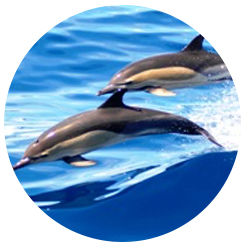 Common Dolphin - Whale Watching Long Beach visitors will also likely see the Common Dolphin. The Common Dolphin generally weighs about 160 pounds and is 5 to 8 feet long. They are the fastest species of small dolphin, and hit top speeds of over 27 miles per hour. Common dolphins live and travel in enormous pods sometimes numbering thousands. They are highly social and are extremely energetic, making lots of whistling, pulse, and click noises. They often leap out of the water individually or in groups, and often like to ride the bow waves of our boats. Common Dolphins are known to be one of the most intelligent animals on Earth.
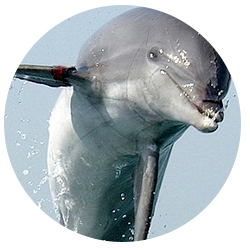 Bottlenose Dolphin - Whale Watching Long Beach customers may also encounter Bottlenose Dolphins. Bottlenose Dolphins generally weigh 440 to 600 pounds and some are known to be as long as 14 feet, but most fall just under 10 feet. Bottlenose Dolphins have tremendous lifespans, often living thirty to fifty years. They eat anywhere from thirteen to thirty-three pounds of fish, squid, octopus, and other sea creatures a day. Bottlenose Dolphins utilize echolocation, the bouncing of sounds off objects to determine the position of objects, in order to hunt their prey.
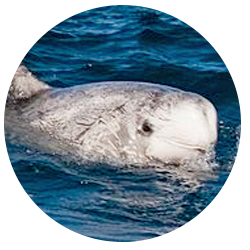 Risso Dolphin - Whale Watching Long Beach visitors may also see the Risso's Dolphins, also known as "gray dolphins." Risso's Dolphins have thick bodies and narrow tails. They weigh anywhere from 660 to 1,100 pounds and are 8.5 to 13 feet in length. They are also found in pods, with pod sizes varying from 5 to 50, but usually falling within the 10 to 30 range. Rissos are able to dive for 30 minutes down to over 1,000 feet below, but generally make short dives lasting between one to two minutes. Rissos tend to hunt at night when their prey of anchovies, krill, and squid are closer to the surface.
 Pacific White Sided Dolphin - Whale Watching Long Beach patrons may also have an opportunity to view the Pacific White-sided Dolphin. Male Pacific White-side Dolphins weigh up to 440 lbs and females weigh up to 330 lbs. The males get up to 8 feet in length while the females are smaller, at about 6.5 feet in length. Among their distinct features are dark grey rings around their eyes and unique coloration on various parts of their bodies. They generally have three different colors on their bodies. Their chins, throats, and bellies are a creamy white shade. Their beaks, flippers, backs, and dorsal fins are dark grey. The Pacific White Sided Dolphin will also have light grey patches on its sides, and a light gray stripe running from its eyes to its dorsal fin, where the stripe becomes thicker all the way to its tail.
Our Whale Watching Long Beach visitors may also see: Giant Sun Fish, Marlin, Swordfish, Jellyfish, Pelican, Seagulls, Mako Sharks, as well as other sharks various other creatures.
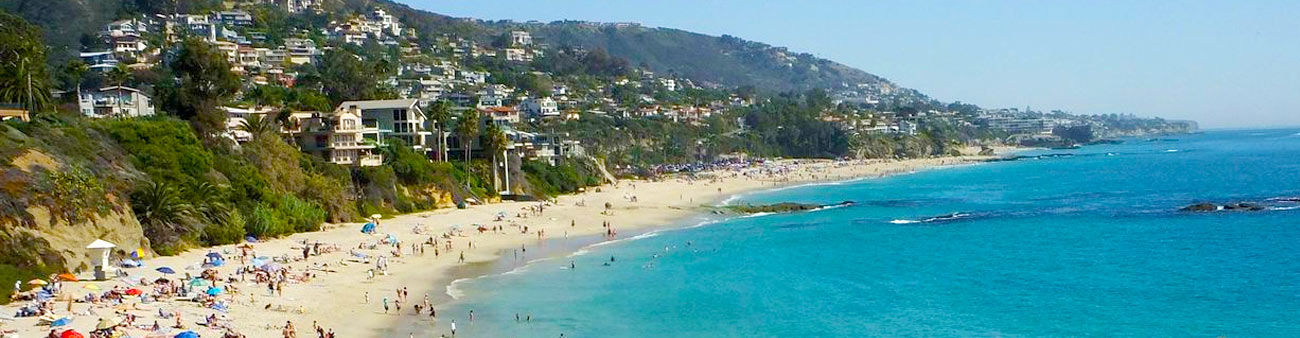
Recommendations for lodging and hotels while whale watching in Long Beach
The Westin Long Beach - Halfway between Los Angeles International Airport and Orange County Airport, The Westin Long Beach is renowned for both its convenience and beautiful location. Only a mile from the beach, and a few minutes from the new Aquarium of the Pacific, guests can experience the best of California.
Long Beach Mariott - Beautifully landscaped hotel creates a resort-like atmosphere. The Mariott in Long Beach has some nice perks and is reasonable priced. Rooms include telephone with messaging features, voice mail, individual climate control, and high speed internet.
Hyatt Regency Long Beach - Hyatt Regency has 528 stylish guestrooms with water or city views, generous work area, Wi-Fi, iHomes, and other amenities. Hyatt is known for great service and the Hyatt Regency in Long Beach is no exception.
Sea Port Marina Hotel - Just a few steps from white sandy beaches, sailing, surfing with a selection of specialty shops, forty-two restaurants, four grocery stores and two movie theatres; all for your dining and leisure activity. Sea Port Marina Hotel offers several options in terms of amenities and prices.
Residence Inn Long Beach - Economical option centrally located for Long Beach.
Other Attractions besides Whale Watching in Long Beach
- The Aquarium of the Pacific - This is a great complement to go with a whale watching trip. Learn more on the marine environment and the different mammals that you will see in the wild.
- The Queen Mary - Historic Ocean liner and world war II troop carrier. Several tours to choose from. There is also a cold war submarine that is on display and has open tours as well.
- Earl Burns Miller Japanese Garden - Beautiful garden located on the Cal State University Of Long Beach grounds.
- Belmont Shore - A great hub for all types of shopping, restaurants, and night life with for those of all ages. Nice way to spend the afternoon.
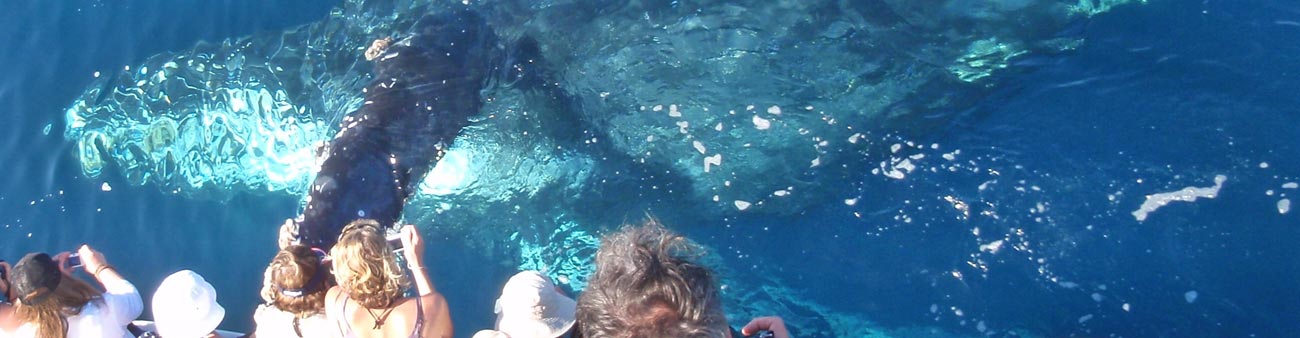
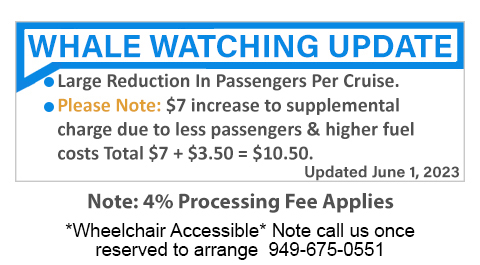
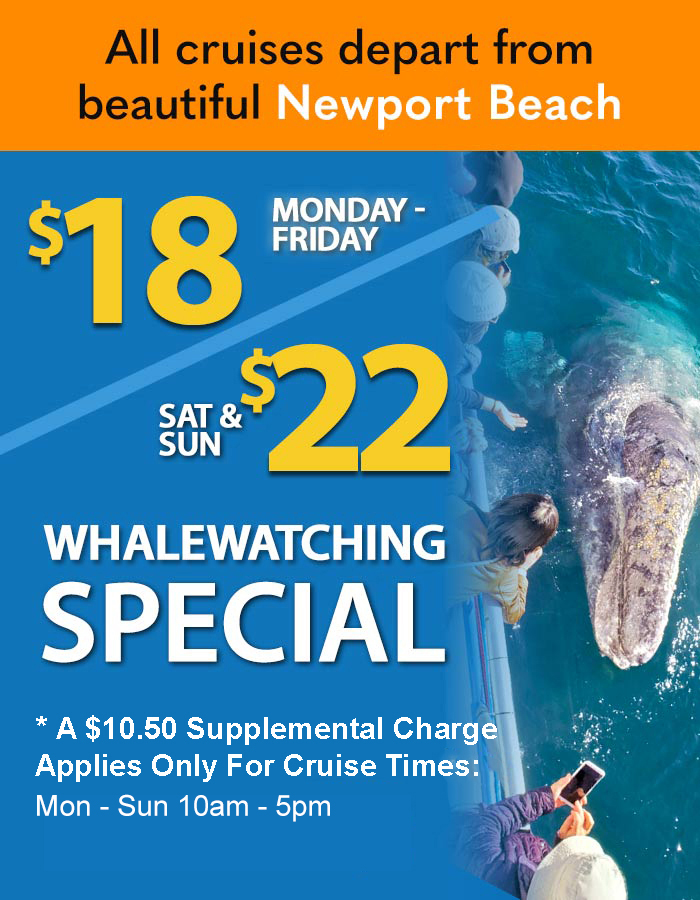
Whale watching coupons for Long Beach visitors. Save 60% with this $18 whale watching cruise special. Newport Landing's Long Beach whale watching coupon is a great offer that can be used on any of our whale watching & dolphin cruises. The whale watching cruise coupon is valid for up to 10 persons per coupon and is valid for any of our 2.5 hour whale watching cruises offered year round multiple times daily departing from Newport Beach. View the annual gray whale migration during the winter and spring months and the giant blue whales during the summer and fall months.
Reserve your whale-watching trip!
Newport Whales runs whale watching excursions multiple times a day seven days a week all year long. Along with viewing Whales you can expect to see dolphins, sea lions, marine birds, and other neat marine creatures. Please try to arrive at least 30 minutes before your cruise departure time. Need help with directions or parking or for making reservations on cruises less than 24 hours away, please give us a call (949) 675-0551.
BOOK ONLINE BELOW FOR $18 SPECIAL
OR CALL (949) 675-0551 AND MENTION PROMO: WHALEWATCH18DEAL
SHARE
FOR RESERVATIONS, CALL (949) 675-0551