Southern California Whale Watching
Whales, Dolphin, & Other Marine Animals Seen While Whale Watching in Southern California
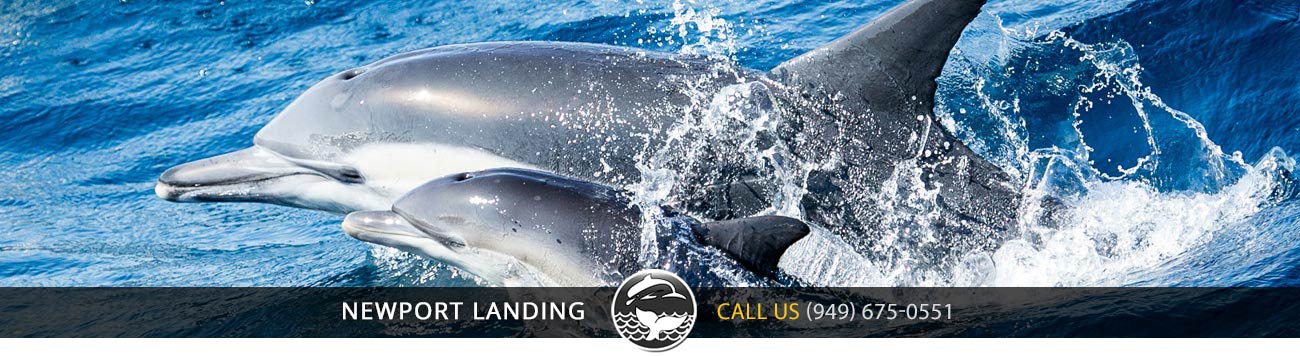
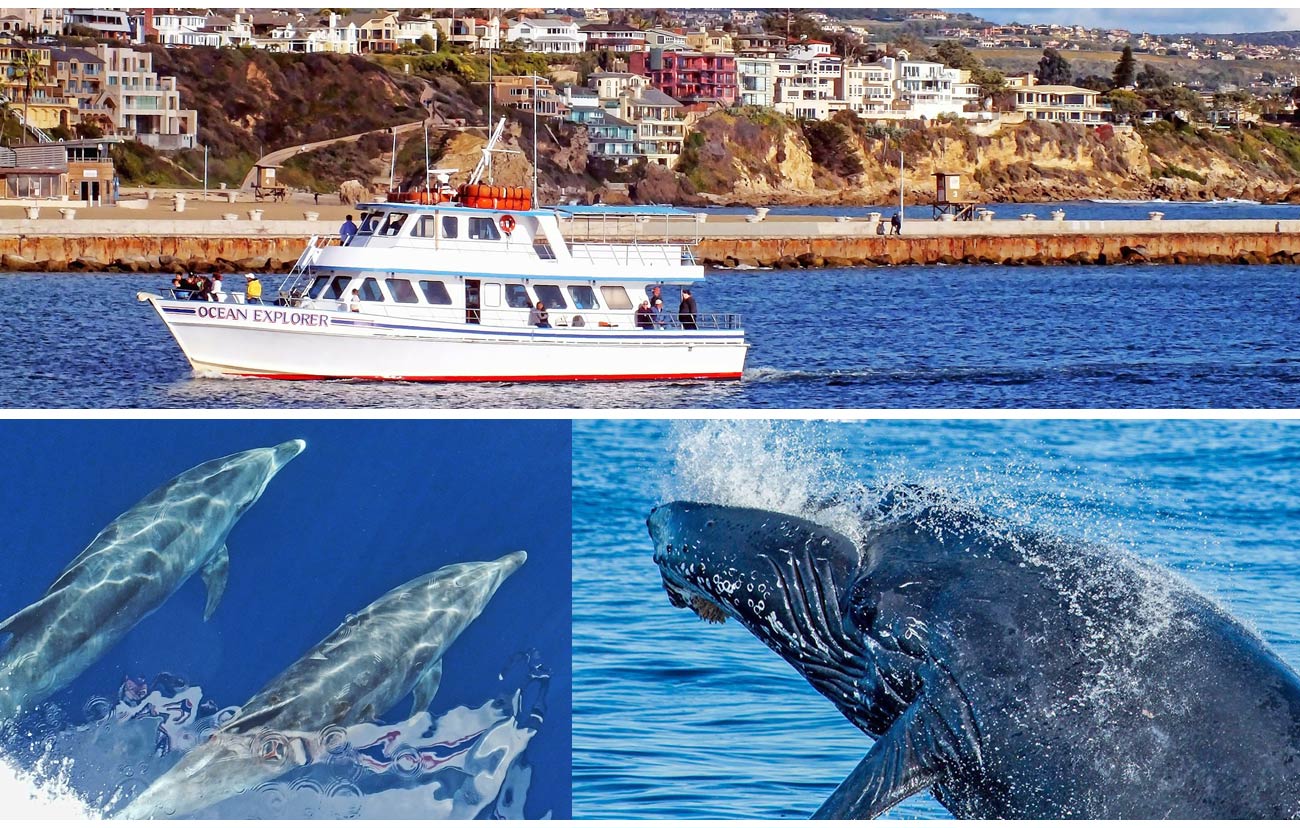
For Southern California whale watching, Newport Landing provides year round whale watching cruises departing from Newport Beach. With multiple cruises offered every day year round there is always an opportunity to view whales and dolphin. Winter and Spring offer the annual grey whale migration which brings thousands of grey whales along the Southern California coastline as they travel to breeding grounds in Mexico and then back again to their summer feeding groups in the Pacific northwest. Giant Blue whales are common during the Summer and Fall months with sightings of the amazing creatures on almost every trip. These giant mammals attain lengths of 100 feet and eat 4-6 tons of krill in one day. Other whale species that can be encountered include finback whales, minke whales, humpback, and even killer whales on occasion. Along with whales, dolphins are also encountered. Several species of dolphin can be viewed and giant super pods of common and bottle noise dolphin numbering a thousand or more are often viewed making for an amazing sight. Sea lions and their pups are seen on every cruise as well.
Whale Species in Southern California and Surrounding Waters
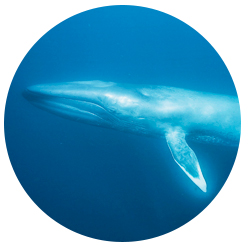 Blue Whale - The largest animal on the planet, the Blue Whale, swims and feeds right here off Newport Beach coast. Southern California whale watchers can view these giants during the summer months. Blue Whales average 100 feet in length and 100 tons, this is the size of a Boeing 737 Jet. These whales feed off Southern California on small crustaceans, krill, by a method of straining the water they take into their huge mouths. About 50 tons of water can fit in a Blue Whales mouth, using their baleen plates, modified teeth that look like a push broom; the whale pushes the water through the plates catching the krill. A Blue Whale needs to eat 8,000 pounds of krill per day!
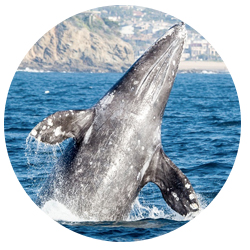 Grey Whale - California Gray Whales have one of the longest migrations of any mammal, round trip it can be 12,000 miles long. These baleen whales travel from the cold arctic waters of the Bering and Chukchi Seas, where they feed in the summer, all the way down to Baja Mexico, where they give birth and breed during the winter. Starting from December until April, Southern California travelers can see Gray Whales during their migration and might even see some newborn calves. Gray Whales feed on amphipods and tube worms they sieve out of the mud from the sea floor. Female Gray's can get to 45 feet and weight 30 tons, males are slightly smaller. With the lack of a dorsal fin and gray patches covering their bodies, Gray Whales are easily identified.
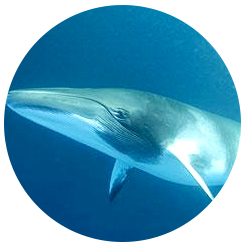 Finback Whale - The second largest animal on Earth, the Finback Whale can reach over 78 feet and 60 tons. This baleen whale can be found off Southern California year-round but are most abundant in the summer and fall months. Finbacks can eat up to 3 tons a day and specialize in catching small fin bait fish and krill. They have a unique way of rounding up these fish; their lower jaw is asymmetrically colored. One side is dark gray and the other is white, scientists believe they show the white side of their jaw to scare fish into a tight ball making it easier to gulp up. Finback Whales have over 300 fringed baleen plates, which hang from the upper jaw and are made of keratin; these plates can be 2.5 feet long and almost a foot wide.
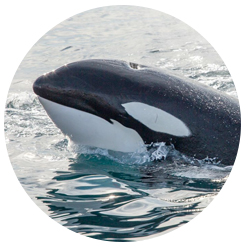 Killer Whale (Orca) - Orcas are the most infamous whale in the world. These black and white dolphin are rarely seen but Southern California visitors might have a chance if they come in January. They are well known as Killer Whales due to their attacks on other whales and marine mammals. Some Orcas can reach lengths of 30 feet and weigh 16,000 pounds. Not all Orcas eat mammals, others eat fish or squid; killer whales are toothed whales so they are able to catch their food with sharp teeth and strong jaws. The gestation period for this dolphin is 17 months, and a calf can nurse for up to 12 months. Killer Whales are the third smartest mammal and are extremely social in their pods.
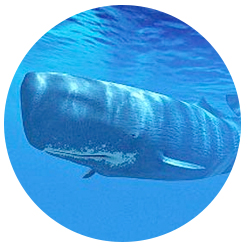 Sperm Whale - Sperm Whales are a uniquely specialized toothed whale. They prefer the warmer waters but have been seen off of Long Beach and Newport Beach, if you are traveling to Southern California you may have a chance to see these famous creatures. Sperm Whales are one of the deepest diving whales, reaching depths of 2,000 to 13,000 feet lasting almost 2 hours, of course this is not every dive. The reason for these deep dives is to find their favorite food, the giant squid. Sperm Whales got their name for the Spermaceti organ located in the forehead.
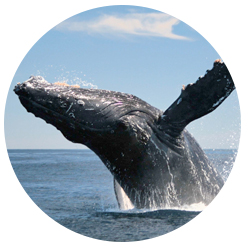 Humpback Whale - Humpback Whales are beloved by all Southern California whale watchers because of their playful and curious personalities. The largest these baleen whales get is typically 40 to 50 feet and 25 to 30 tons. Humpbacks are an acrobatic whale often seen breeching and tail slapping. They are also one of the most vocal whales, only the males of this species will sing intricate songs that can last 20 minutes and repeating for hours at a time. Humpback Whales can be individually identified by the underside of their flukes which have unique black and white patterns like a fingerprint; in fact many research facilities have Humpback Whale catalogs documenting each whale they've seen.
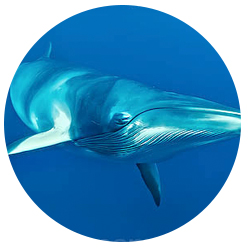 Minke Whale - Whale watching in Southern California encounters Minke whales, the most common baleen whale in existence, year-round. These torpedo shaped baleen whales are easily recognized but are typically shy and hard to spot. They have almost no spout and very little back is shown when they surface. Minke Whales can swim up to speeds of 23 mph but cruise at a slower 10 mph. They are the smallest baleen whale we see at a size of 33 feet and 10 tons. Minkes are nicknamed the "Stinky Minke" due to the smell they emit when they exhale.
Dolphin species commonly viewed while Whale Watching
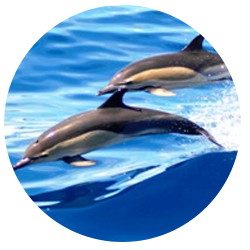 Common Dolphin - Common Dolphin are the smallest dolphin we see here off Southern California. Commons can be 200 pounds and grow to 6.5 feet. They are a toothed whale and are experts at catching anchovies and sardines, working together to corral a school of fish. Most if not all dolphin use echolocation to hunt and "see" in dim light; echolocation is the emission of sounds through the melon on the forehead. These sounds then bounce off objects and return back to the dolphin showing the shape and density of what’s in front of them.
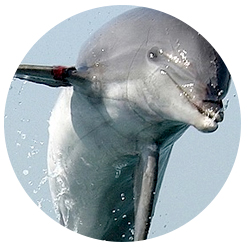 Bottlenose Dolphin - Whale Watching Southern California customers are surprised when they see this well liked dolphin in the wild. Bottlenose Dolphin are just as playful in the open ocean and much happier. They are quite large weighing in at 1,200 pounds and 12 feet in length. Bottlenose can be found in all oceans and some groups would rather live in harbors, rivers, and shores. Extremely smart and loyal to each other, Bottlenose Dolphin have been used in studies and by the Navy to find given things. Fish are their favorite food source typically eating 15 pounds of fish a day.
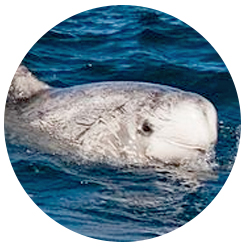 Risso Dolphin - Whale watching in Southern California, visitors may also see Risso's Dolphin, which have thick bodies covered in white scars, from attacks by the squid, and narrow tails. Risso's are able to dive for 30 minutes to depths of over 1,000 feet, this is due to their main food source, squid which live in deeper waters. These dolphin have four teeth that specialize in grabbing onto squid. They weigh anywhere from 660 to 1,100 pounds and are 8.5 to 13 feet in length, with blunt noses and upturned mouths.
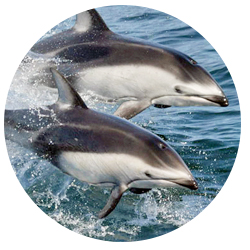 Pacific White Sided Dolphin - Male Pacific White-side Dolphins weigh up to 440 pounds and females weigh up to 330 pounds, and the males get up to 8 feet in length while the females are smaller, at about 6.5 feet in length. Whale watching in Southern California, patrons may also have an opportunity to view the colorful Pacific White-sided Dolphin. The coloration on Pacific White-sides is beautiful from black to white and all the grays in between, definitely the most intricate patterns. These dolphin are easy to distinguish by the sharply hooked dorsal fin and blunt snouts.
SEA BIRDS ENCOUNTERED ON A SOUTHERN CALIFORNIA WHALE WATCHING TRIP
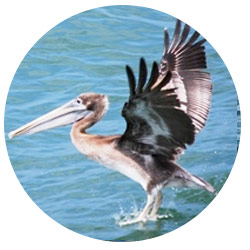 California Brown Pelican - California Brown Pelican is the smallest of the eight species of pelican, with a wing span of 6 feet or slightly larger. The Brown Pelican is the only bird to have all four toes including a hind toe. Pelicans can live and fish for up to thirty years without going blind due to cataracts formed when they hit the surface of the water. It is common to see a line of pelicans soaring just above the surf while traveling in search of whales. Brown Pelicans are known to be the only group in the Pelican family to dive to catch their prey of small fin fish.
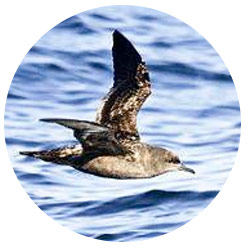 Shearwaters - Black-Vented Shearwaters will come to Southern California by the thousands to winter along the nearest-shore. They fly close to the waves, feeding by snatching food from the water's surface and sometimes diving just below the surface. They make for a very active viewing experience. This species of Shearwater can dive up to 60 feet, fishing for small fish and maybe crustaceans.
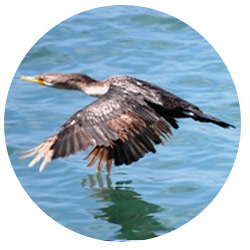 Cormorant - The most common species of cormorant we see off Southern California are the Double-Breasted Cormorant. They are heavy boned birds that are excellent swimmers, sometimes diving up to 140 feet down to find food. Their main food source are small fish which they catch below the surface. Cormorants are all black with a yellow face and beak. You can often find them standing on rocks or docks with their wings spread trying to dry themselves. They cannot fly very well if they get too wet.
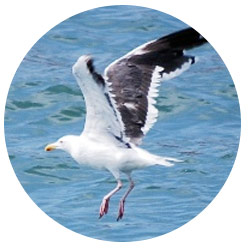 Pelagic Gulls - Gulls or more commonly known as Sea Gulls are not shy and will follow the ship for some distance. There are several species of gulls that are commonly viewed on almost every whale watching excursion including the California Gull, Western Gull, Heermann's Gull and Herring Gull. When hunting they will twirl downward and open their wings at the last minute before hitting the water.
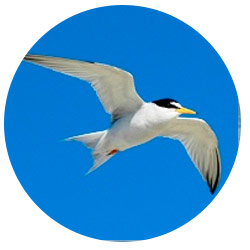 Terns - Terns are small speedy birds that are commonly viewed along the coastline of Dana Point. The Royal and The California Lesser tern are two of several types that are seen here off Southern California. Their uniquely shaped wing allows for quick turns and aids their agility. They can hover above the water until the moment comes for them to dive in and snatch up a fish.
Other Marine Creatures Viewed While Whale Watching
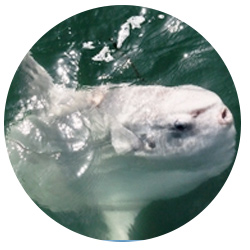 Giant Sunfish - The Mola mola or Common Ocean Sunfish, are one of the most unusual looking creatures on Earth. Huge and vertically flat, these silvery-gray fish have small mouths and a rounded stubby tails that mesh into their massive bodies. Topping out around 6,000 pounds, Mola mola’s are the world's heaviest bony fish. They grow to about 10 feet long and are often 14 feet wide. They seem to prefer the warm blue waters during these months and seen laying on the surface, like a silver dollar, waiting for birds to pick parasites off their skin.
Sharks
There are several species of sharks that can be seen while whale watching including Mako Sharks, Blue Sharks, Thresher Sharks, and rarely even Great White Sharks.
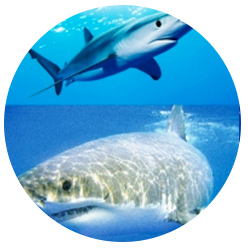 Mako Shark - Makos are the fastest species of shark reaching speeds of 43 mph and usually their fin is spotted as they zip through the water. These sharks are seen with some frequency on whale watching cruises. They rarely attack man unless provoked although larger specimens are considered quite dangerous. They can grow over 1000 pounds, but many are juveniles from 60 to 100 pounds.
Blue Shark - Blue sharks are open ocean sharks loving the deep waters that can appear in large numbers especially when there is a food source nearby. Occasionally seen while whale watching they are harder to spot due to their coloration and smaller size in compared with other sharks of Southern California. Blue sharks can swim up to 1,000 miles in a short time.
Thresher Shark - Thresher sharks are seen while whale watching especially during the spring months during the grey whale migration. They are typically seen around huge schools of anchovy and sardine. It is a quick and yet impressive sighting, as they can come completely out of the water while pursuing their dinner. They can be quite large especially when their tail is included which doubles them in size. They are the only shark to hunt with its tail; they will whip their powerful tails to stun schools of fish.
Great White Shark - White Sharks are an apex predator and can grow up to 20 feet in length. One of the rarest of sharks sighted during a whale watching cruise off Southern California. Only a couple sightings a year occur and the larger adults are even rarer. Spring and early summer seem to have the highest number of sightings in our area.
 Flying Fish - While not actually "flying", these fish will swim up to 30 mph and launch into the air, using their specialized fins to glide for up to 1/4 mile. During the summer and fall months large schools of flying fish arrive and seen especially later in the afternoon, dozens can be spotted launching themselves and gliding as the whale watching ship cuts through the water off Southern California.

SHARE
FOR RESERVATIONS, CALL (949) 675-0551